

Belt
Primary
Unknown Urartian
NationalityUrartia, Middle East
Date650–600 BCE
MediumBronze
DimensionsAdditional Dimension: 46 in. (116.8 cm)
Credit LineBlanton Museum of Art, The University of Texas at Austin, Archer M. Huntington Museum Fund, 1983.124
Rights Statement
Collection AreaAntiquities
Object number1983.124
On View
Not on viewCollection Highlight
The object originates from the ancient culture of Urartu that flourished in present-day Armenia from about 860 BCE to 590 BCE. The Urartians excelled in metalwork, the best examples of which are found in belts like the work presented here. These wide bronze strips were probably sewn to a leather backing and worn as personal decoration.
The Blanton’s belt features three horizontal rows of animals and human figures. A chariot with two horses and two figures chases a springing lion, which chases a mounted figure carrying a spear, which chases a galloping bull, which chases a mounted figure carrying a shield. Animal motifs like these inspired ancient Greek art during the eighth and seventh centuries BCE.
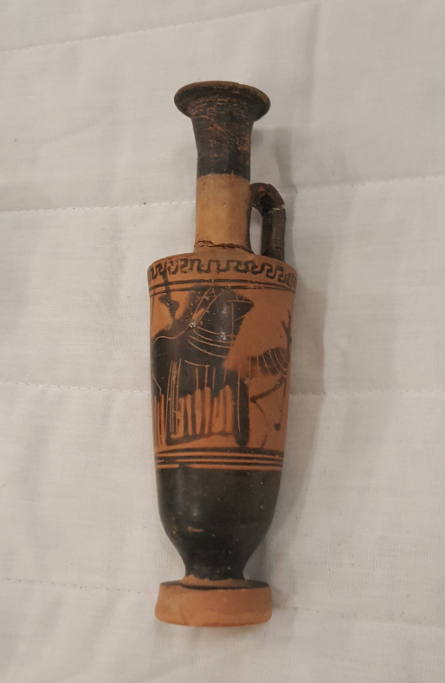
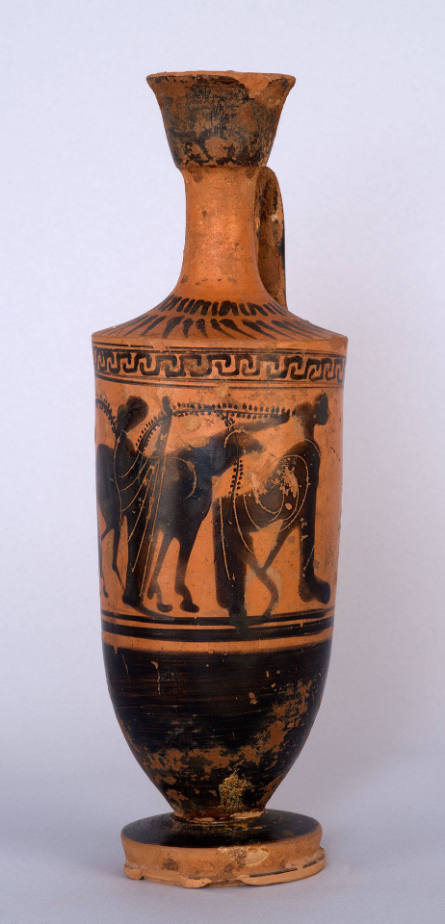

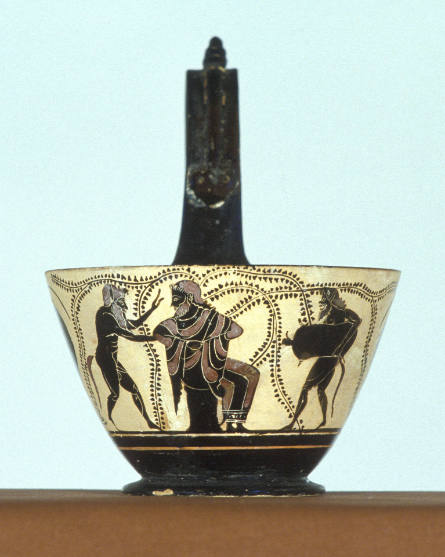
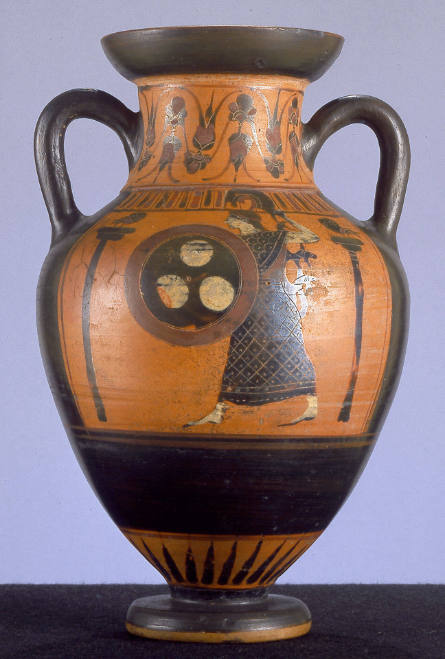
Unknown Greek-Attic
circa 540 BCE
Object number: 1980.32