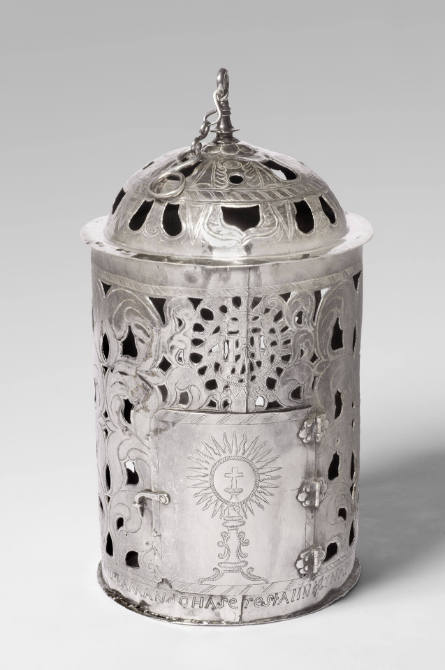
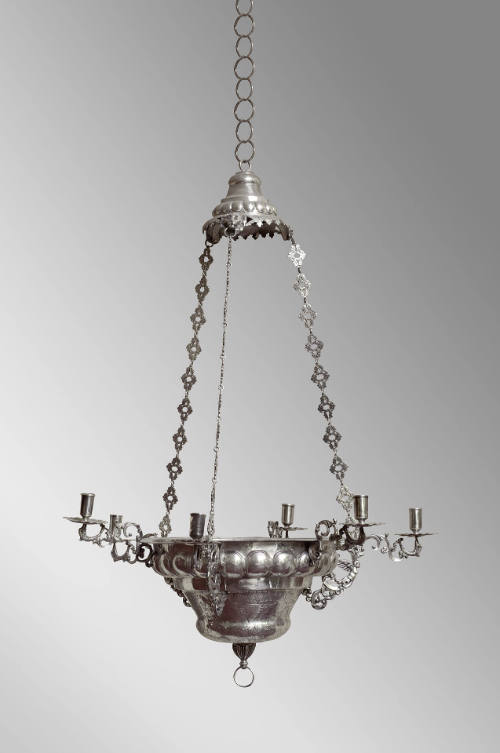

Votive lamp
Primary
Unknown Artist
Place MadeBolivia, South America
NationalityBolivian, South America
Date18th century
MediumSilver
DimensionsAdditional Dimension: 42 × 30 in. (106.7 × 76.2 cm)
Credit LineBlanton Museum of Art, The University of Texas at Austin, Purchase, 2018.306
Keywords
Rights Statement
Collection AreaLatin American Art
Object number2018.306
On View
Not on viewCollection Highlight
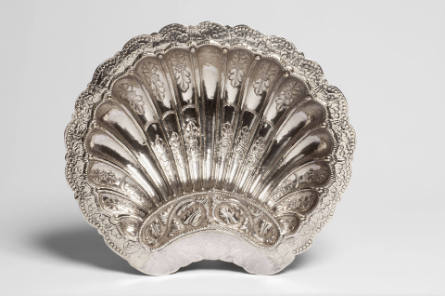
This silver piece was manufactured with metal extracted from Potosí, in what is today Bolivia. Potosí was the most important mining town in South America during the colonial period. The precious metal was exploited through a tribute system of Indigenous forced labor known as mit'a, producing fabulous wealth for the Spanish crown. Silver was discovered in Potosí in 1545 in the Cerro Rico (Sumaq Urqu in Quechua), and it came to be considered such a mythical land of riches for colonizers that valer un Potosí (“it’s worth a Potosí”), became a common expression to denote great value.
Exhibitions
![Agnus Dei [The Lamb of God]](/internal/media/dispatcher/8819/thumbnail)